Japanese Metal Damascening
Nunome Zogan is the Japanese form of metal damascening that translates as fabric inlay or cloth weave and uses foils 0.02mm thick. It is a frugal way of working with gold. The gold is attached to the base metal by creating a cross-hatched ground made with chisels. The technique was originally used on iron and steel to decorate weapons although more recent practitioners have expanded this to include irogane copper alloys, brass and sterling silver.
Process, Repetition and Time. Nunome Zogan
This video was filmed during a residency at Greywood Arts in Ireland and showcases the traditional Japanese metalwork technique Nunome zogan that uses gold sparingly. It highlights the importance of process, repetition and time in creativity.
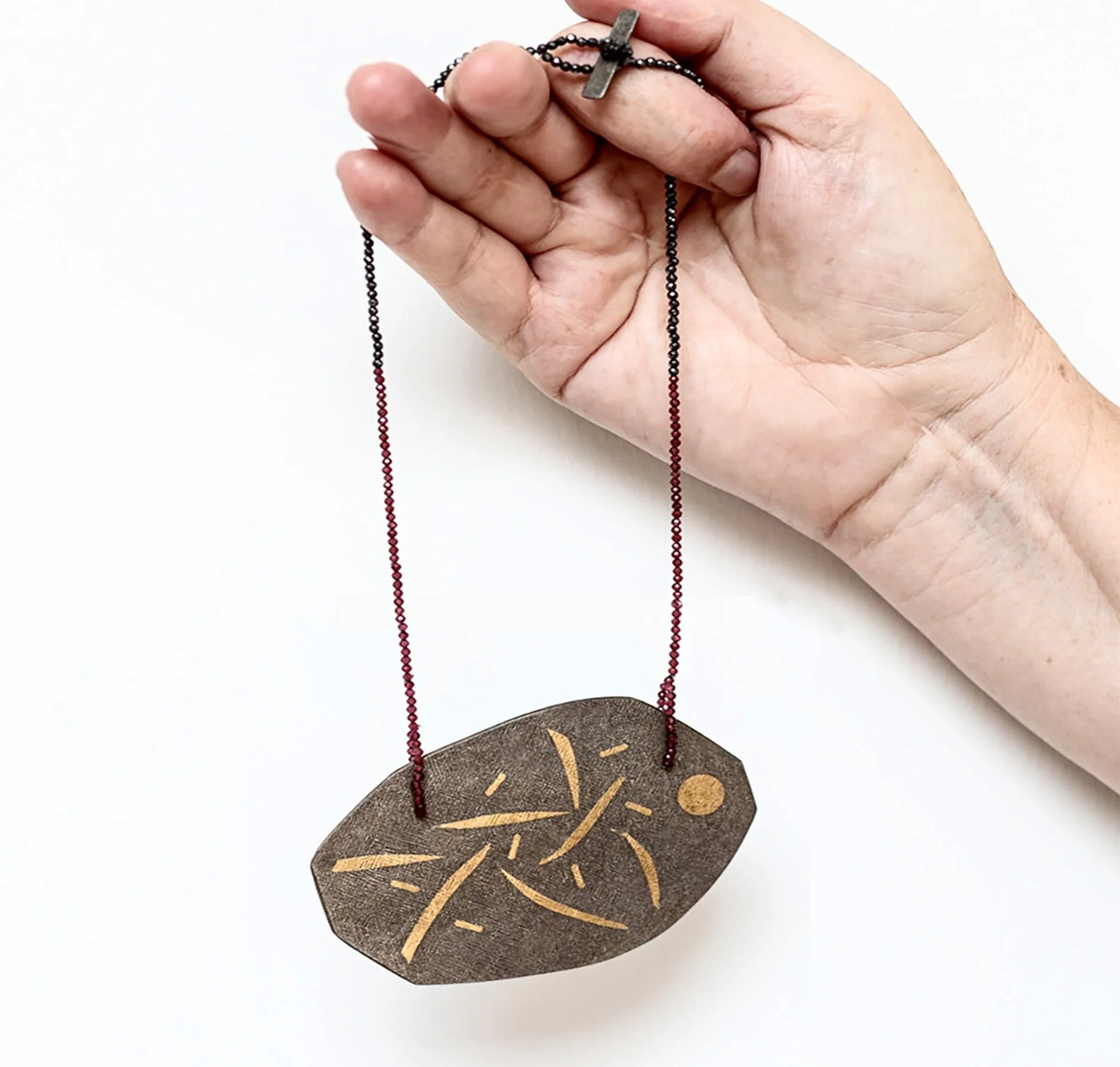
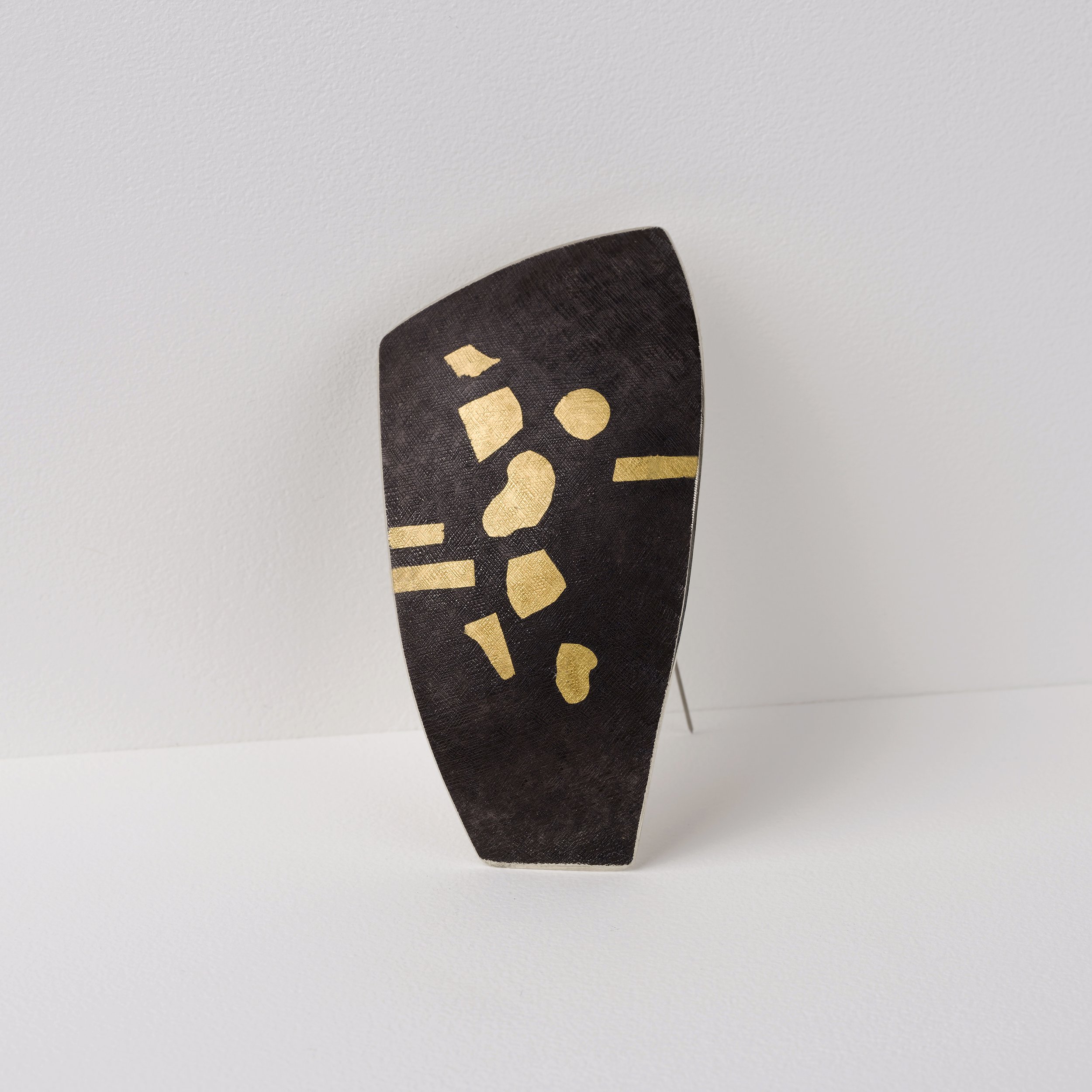
Sandra Wilson 2026 E-Pendant Jo shibuichi (60% copper 40% silver) 24ct gold foil 0.02mm Garnet and hematite beads. All metal recovered from electronic waste. Image: Diarmid Weir
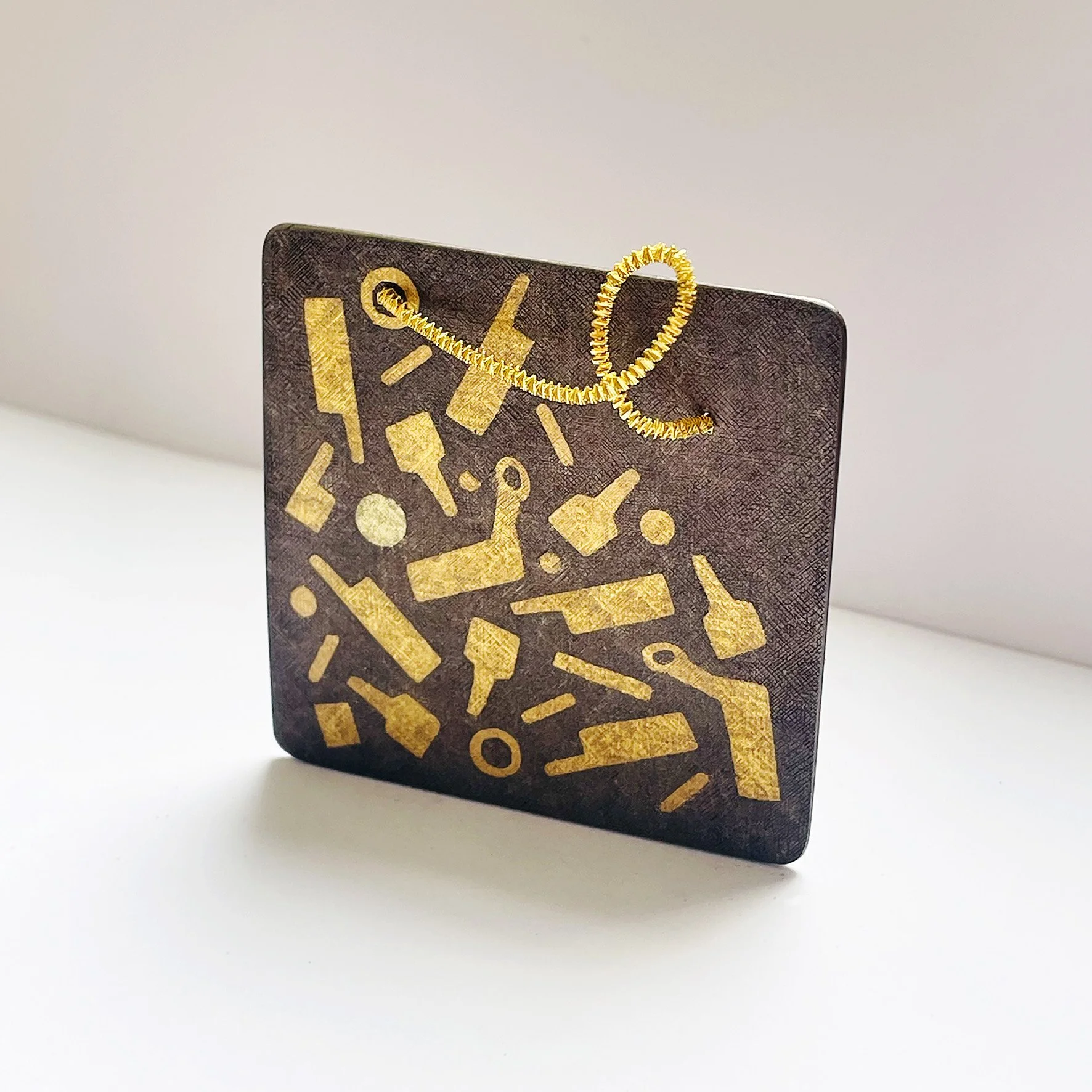
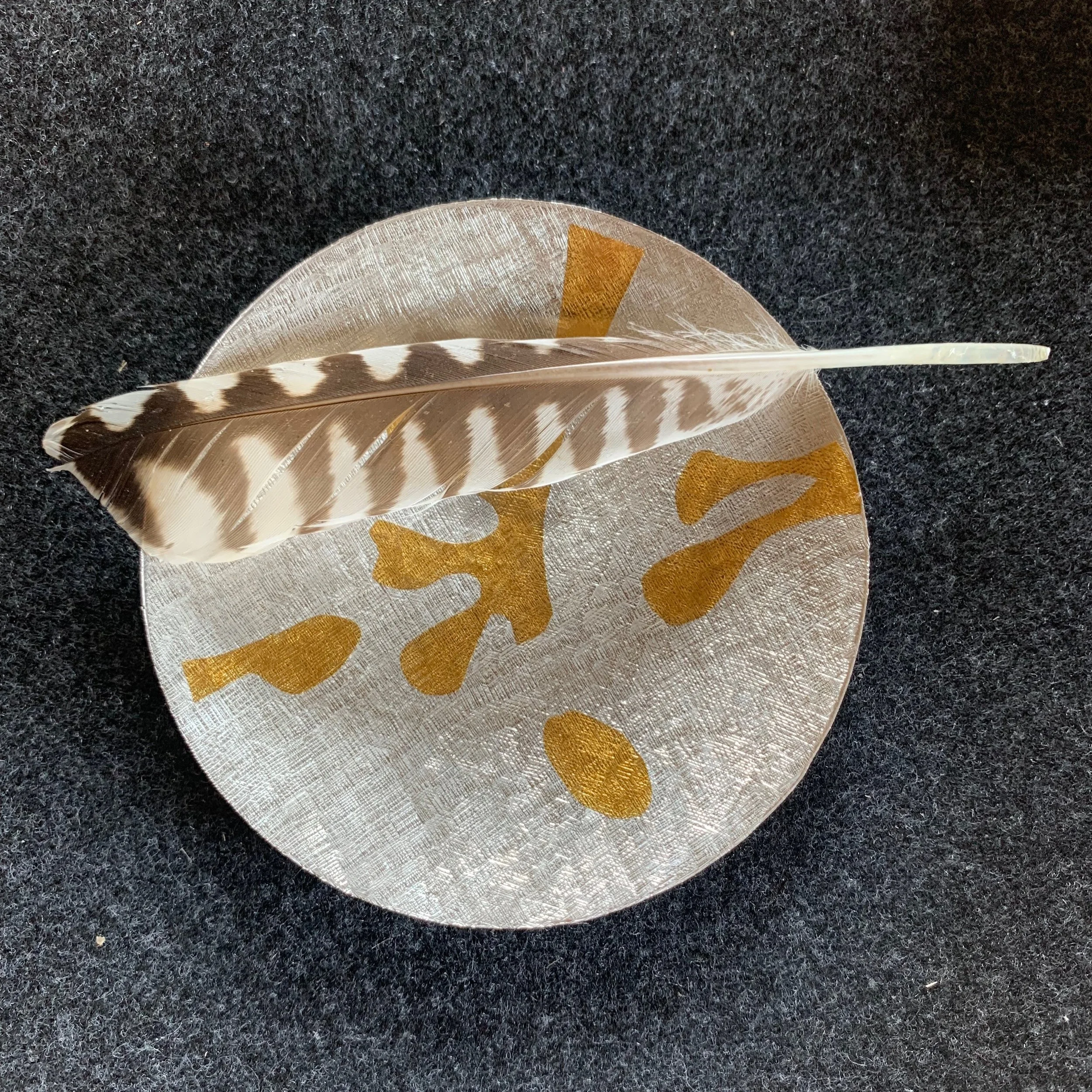
Sandra Wilson, 2025 Traces brooch. 51mm x 51mm x 1mm. Shibuichi, fine gold, 24ct e-waste recycled gold, 18ct green gold, gold plated copper wire and steel pin. Image: Sandra Wilson.
The five circuit board finger shapes are from gold recovered from e-waste.
In electronics a trace is a conductive pathway, typically made of copper on a printed circuit board that connects components. Traces vary in width and thickness depending on the current they need to carry.
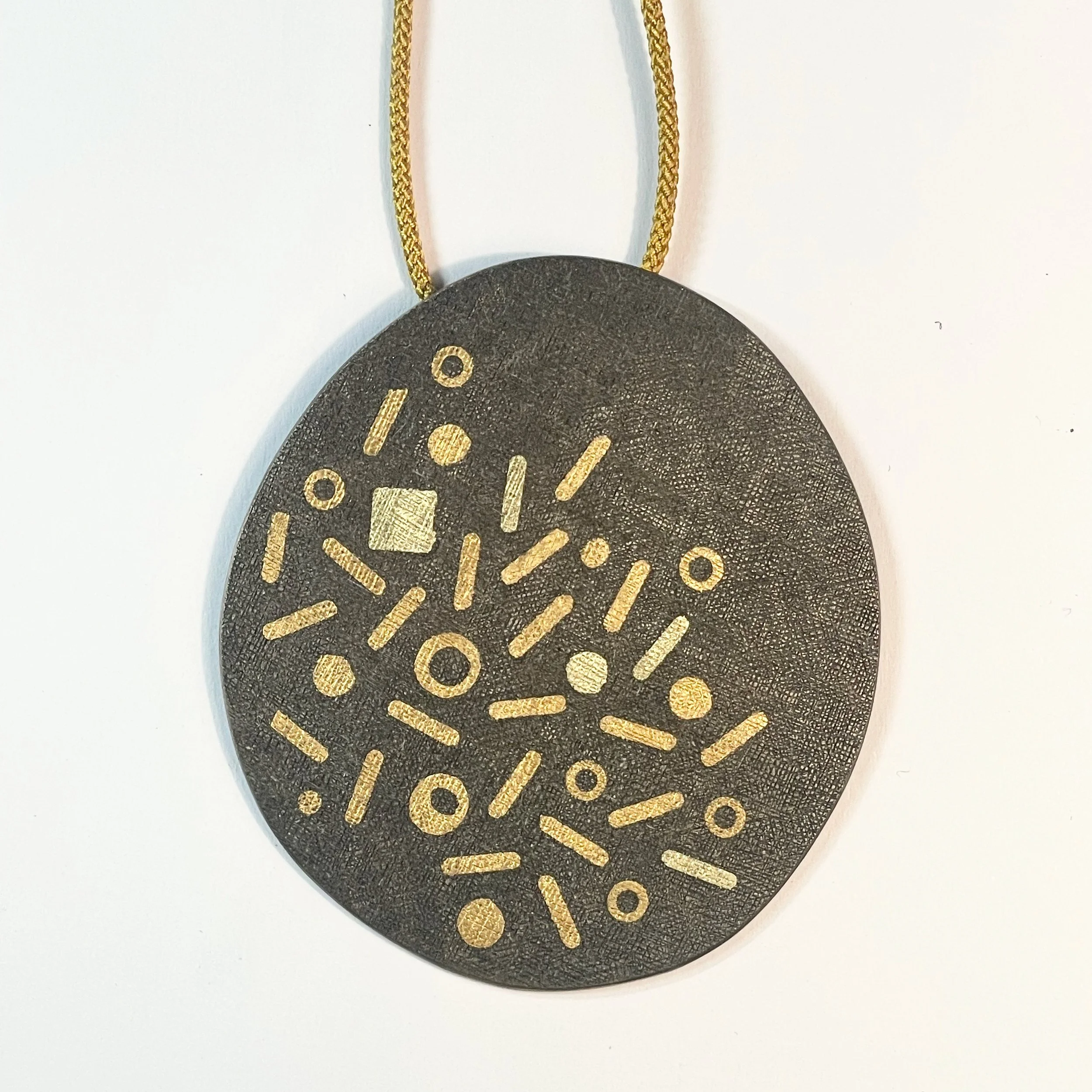
Sandra Wilson 2024, Fingers Pendant. 48mm x 55mm x 1mm. Fine gold, 18ct green gold, shibuichi, sterling silver tube, yellow Japanese kumihimo eight strand braided cord. Image: Diarmid Weir.
The twenty one yellow gold finger shapes are from e-waste and suggest the number of electronic devices that we might own in a lifetime.
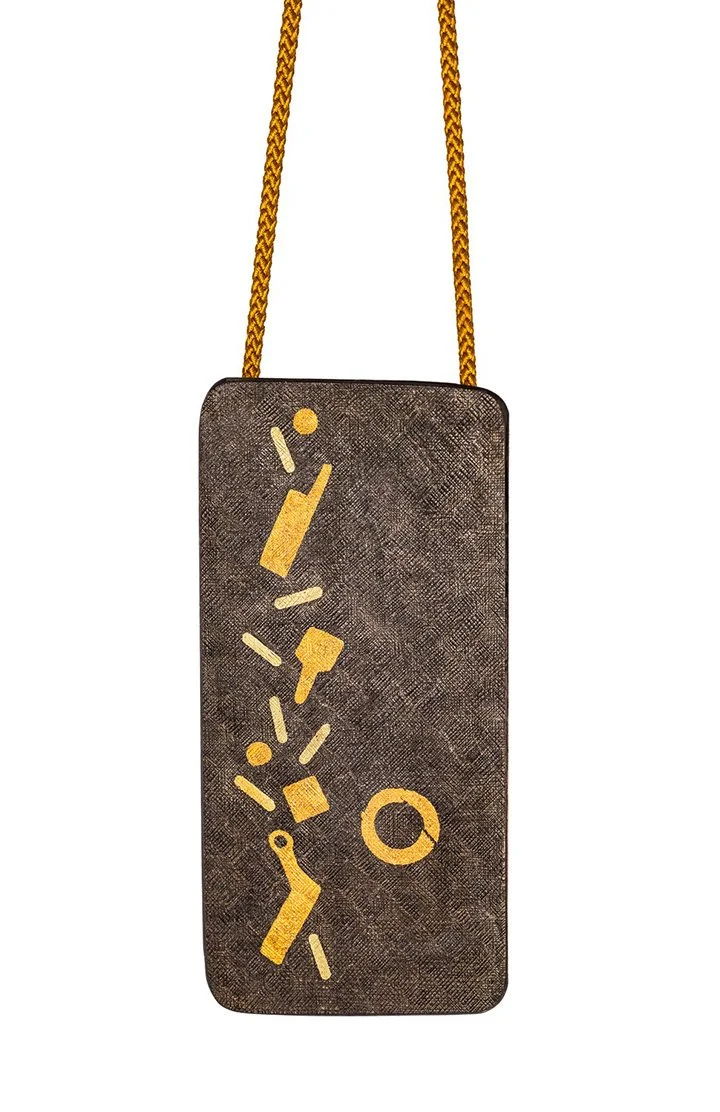
Sandra Wilson 2024, Via Pendant. 75mm x 35mm x 1mm. Shibuichi, fine gold, 18ct green gold, sterling silver, and electroplated hematite beads and recycled sterling silver. Image: Diarmid Weir. The gold circle in this pendant was refined from e-waste and rolled down to 0.02mm. In electronics, Via refers to a plated hole connecting different layers of a printed circuit board (PCB). The electronic definition comes from the Latin for "way," describing the path for electrical signals between layers.



When I started my research into Japanese metalworking I began creating my own metalwork dictionary for reference. Maybe it will also be useful to you too.
All mistakes are mine…
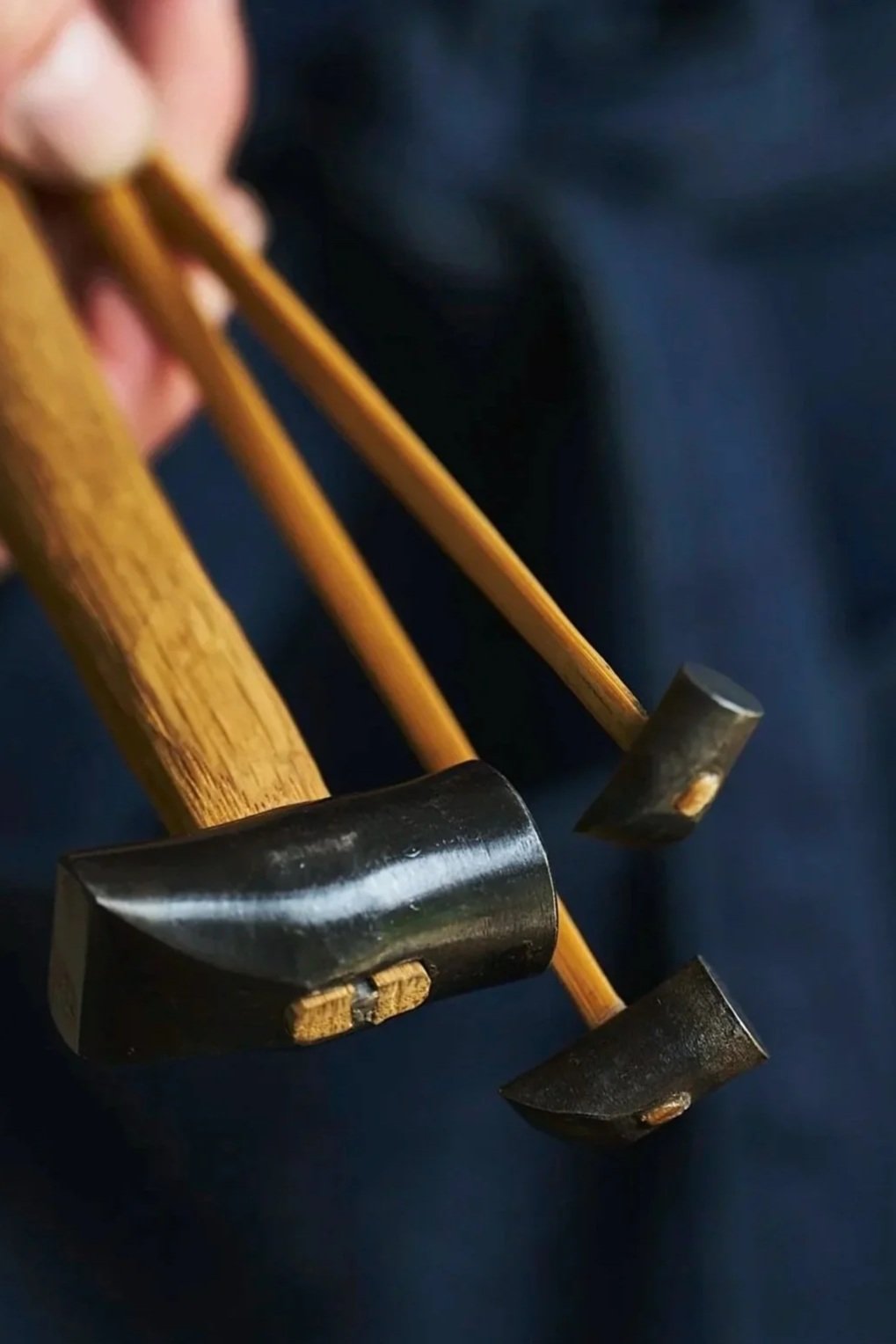
Image of Japanese Hammers - Shannon Tofts